


Introduction
The topic of innie vs outie belly button has fascinated people for years. Although a belly button may seem like a small part of the body, many people wonder why some individuals have an “innie” while others have an “outie.” Questions about appearance, genetics, health, and whether one type is better than the other are common.
The truth is that both innie and outie belly buttons are completely normal in most cases. The shape of your belly button is usually determined by how the umbilical cord heals after birth rather than by the way the cord was cut. While most people have an innie, a small percentage have an outie. Understanding the differences can help clear up common myths and reduce unnecessary concerns.
In this guide, we’ll explore everything you need to know about innie vs outie belly button, including their causes, health implications, myths, hygiene, cosmetic options, and when medical attention may be necessary.
What Is a Belly Button?
A belly button, also called the navel, is the scar left after the umbilical cord is cut following birth. During pregnancy, the umbilical cord supplies oxygen and nutrients from the mother to the baby. Once the baby is born, the cord is clamped and removed, leaving behind a small stump that eventually dries up and falls off.
The remaining scar forms the belly button, and every person’s healing process is slightly different, resulting in different appearances.
What Is an Innie Belly Button?

An innie belly button curves inward toward the abdomen. It is the most common type, with the majority of people having this shape.
An innie can be:
- Deep
- Shallow
- Round
- Oval
- Vertical
- Slightly folded
The exact appearance varies from person to person, but all of these are considered normal.
What Is an Outie Belly Button?
An outie belly button protrudes outward instead of inward. It forms when extra scar tissue develops or when the tissues beneath the navel heal differently.
Only a small percentage of people have an outie, making it less common but still completely normal in most situations.
Outies can vary in size and shape and often remain unchanged throughout adulthood.
Innie vs Outie Belly Button: Main Differences
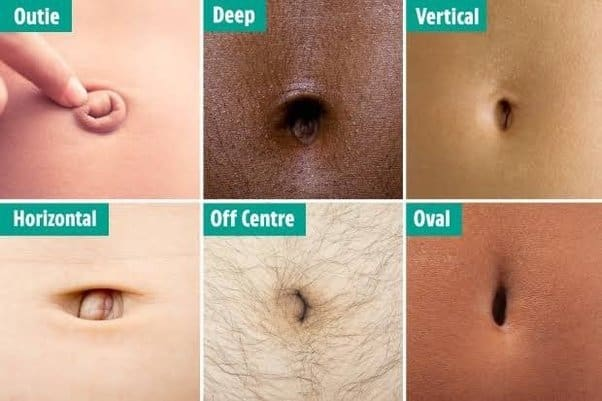
When comparing innie vs outie belly button, the primary difference is appearance rather than function.
Innie Belly Button
- Curves inward
- Most common type
- Easier to conceal
- Different depths are normal
Outie Belly Button
- Protrudes outward
- Less common
- More noticeable
- Usually caused by natural healing
Despite their different appearances, both function exactly the same after birth.
What Causes an Innie or Outie Belly Button?
Many people mistakenly believe the doctor determines whether a baby will have an innie or outie by cutting the umbilical cord differently.
This is a myth.
The shape depends mainly on:
- Natural healing
- Scar tissue formation
- Skin attachment beneath the navel
- Individual anatomy
In some cases, an outie may also result from:
- Umbilical hernia
- Umbilical granuloma (in infants)
- Healing differences after birth
Is an Outie Belly Button Genetic?
There is no strong scientific evidence that belly button shape is directly inherited like eye color or hair color.
Although family members may appear to have similar belly buttons, genetics is not considered the primary determining factor.
Instead, healing after the umbilical cord falls off plays the biggest role.
Are Innie and Outie Belly Buttons Healthy?
Yes.
Both types are generally healthy and require no treatment.
Neither type offers any medical advantage over the other.
A healthy belly button should be:
- Clean
- Dry
- Free of pain
- Free of unusual discharge
- Without persistent swelling
Belly Button Hygiene
Whether you have an innie or an outie, keeping the belly button clean is important.
Cleaning an Innie
An innie can trap:
- Sweat
- Dead skin cells
- Dirt
- Lint
- Natural body oils
Wash gently with mild soap and water during regular bathing.
Cleaning an Outie
Outies are usually easier to clean because they collect less debris inside the fold.
Regular washing is generally enough to maintain good hygiene.
Common Myths About Innie vs Outie Belly Button
Myth 1: Doctors Create Outies
False.
The doctor does not determine your belly button type when cutting the umbilical cord.
Myth 2: Outies Are Dangerous
False.
Most outie belly buttons are perfectly healthy.
Myth 3: Innie Belly Buttons Are Cleaner
Not necessarily.
An innie may actually collect more dirt if not cleaned regularly.
Myth 4: Belly Button Shape Changes Often
Most people’s belly button remains the same throughout adulthood unless affected by pregnancy, surgery, major weight changes, or a hernia.
Can Pregnancy Change a Belly Button?
Yes.
During pregnancy, many women notice their innie becomes flatter or temporarily turns into an outie due to pressure from the growing uterus.
After childbirth, the belly button often returns to its previous appearance, although not always.
Can Weight Gain Affect Belly Button Shape?
Significant weight gain or weight loss can alter the appearance of the abdomen and make the belly button look deeper, flatter, or slightly different.
However, it usually does not permanently change whether someone has an innie or an outie.
Umbilical Hernia vs Outie Belly Button
An outie belly button should not automatically be confused with an umbilical hernia.
An umbilical hernia occurs when tissue pushes through a weak area of the abdominal wall.
Signs of a hernia include:
- Pain
- Bulging that increases when coughing
- Swelling
- Tenderness
If these symptoms occur, a healthcare professional should evaluate the condition.
Cosmetic Surgery Options
Some adults choose cosmetic surgery to change the appearance of their belly button.
Procedures may include:
- Umbilicoplasty
- Hernia repair (if medically necessary)
- Scar revision
These procedures are usually elective unless a medical condition requires treatment.
When Should You See a Doctor?
Consult a healthcare provider if your belly button develops:
- Persistent pain
- Redness
- Swelling
- Bleeding
- Pus or foul-smelling discharge
- A new bulge that becomes painful
These symptoms could indicate an infection or another medical condition requiring treatment.
Final Thoughts
Understanding innie vs outie belly button is easier once you know that both types are usually normal and healthy. The appearance of your belly button is largely determined by how your umbilical cord heals after birth—not by how it was cut. While innies are more common, outies are simply a natural variation and rarely indicate a health problem.
The most important thing is to keep your belly button clean and monitor it for unusual changes such as pain, swelling, or discharge. If you notice anything concerning, seek medical advice. Otherwise, whether you have an innie or an outie, your belly button is simply a unique part of your anatomy.
Frequently Asked Questions (FAQs)
1. Which is more common, an innie or an outie belly button?
An innie is much more common, while only a small percentage of people have an outie.
2. Can a belly button change from an innie to an outie?
It can temporarily change during pregnancy or due to an umbilical hernia, but permanent changes are uncommon.
3. Does the way the umbilical cord is cut determine belly button shape?
No. Belly button shape depends on how the tissue heals after birth.
4. Are outie belly buttons unhealthy?
No. Most outie belly buttons are completely normal and do not require treatment.
5. How should I clean my belly button?
Wash it gently with mild soap and water during regular bathing, and dry it thoroughly afterward.