


Investing for beginners may seem confusing at first, but it is one of the most effective ways to build wealth over time. Many people believe they need thousands of dollars or years of financial experience before they can start investing. The truth is that anyone can begin with a small amount of money, a basic understanding of investment principles, and a commitment to learning. Whether your goal is saving for retirement, buying a home, funding your child’s education, or achieving financial independence, investing can help your money grow faster than simply keeping it in a traditional savings account.
The biggest advantage of investing is the power of compound growth. When your investments earn returns, those returns can generate additional earnings over time. This creates a snowball effect that rewards patience and consistency. Even modest monthly contributions can grow into substantial wealth over the years. In this guide, you’ll learn everything you need to know about Investing for beginners, including how to start, where to invest, common mistakes to avoid, and practical strategies for long-term success.
What Is Investing?
Investing means putting your money into assets that have the potential to increase in value over time. Instead of letting your money sit idle, investing gives it an opportunity to grow through capital appreciation, dividends, or interest.
Unlike saving, which focuses on protecting your money, investing focuses on growing it. While investments involve some level of risk, they also offer significantly higher long-term returns than most savings accounts.
Common investment options include:
- Stocks
- Bonds
- Mutual funds
- Exchange-Traded Funds (ETFs)
- Real estate
- Index funds
- Retirement accounts
Understanding these options is the first step in Investing for beginners.
Why Investing Is Important
Many people underestimate the importance of investing because they focus only on earning income. While earning money is essential, investing allows your money to work for you.
Benefits include:
- Building long-term wealth
- Beating inflation
- Creating passive income
- Achieving financial independence
- Preparing for retirement
- Reaching financial goals faster
Without investing, inflation gradually reduces your purchasing power over time.
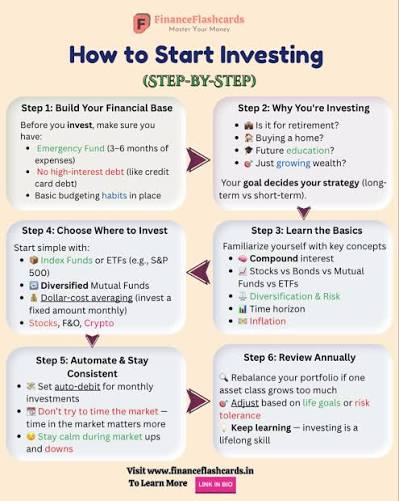
Investing for Beginners: Start with Financial Goals
Before investing, identify what you want to achieve.
Your goals may include:
- Building an emergency fund
- Buying a house
- Saving for retirement
- Paying for education
- Growing long-term wealth
- Generating passive income
Having clear goals helps determine the right investment strategy and time horizon.
Build an Emergency Fund First
Before investing, create an emergency fund covering three to six months of living expenses
This fund protects you from unexpected events such as:
- Job loss
- Medical emergencies
- Major car repairs
- Home maintenance
Having emergency savings prevents you from selling investments during market downturns.
Understand Investment Risk
Every investment involves some degree of risk.
Higher potential returns usually come with higher risk.
Common risks include:
- Market volatility
- Inflation risk
- Interest rate changes
- Company performance
- Economic downturns
One of the biggest lessons in Investing for beginners is learning that risk cannot be eliminated, but it can be managed.
Types of Investments
Stocks
Stocks represent ownership in a company.
Advantages:
- High long-term growth potential
- Dividend income
- Easy to buy and sell
Disadvantages:
- Prices fluctuate daily
- Higher short-term risk
Bonds
Bonds are loans made to governments or companies.
Benefits include:
- More stable than stocks
- Regular interest payments
- Lower investment risk
However, long-term returns are generally lower.
Mutual Funds
Mutual funds pool money from many investors.
Professional fund managers select investments on behalf of investors.
Benefits:
- Diversification
- Professional management
- Convenient for beginners
Exchange-Traded Funds (ETFs)
ETFs are similar to mutual funds but trade like stocks.
Advantages:
- Low fees
- Diversification
- Easy to purchase
- Excellent for beginners
Many financial experts recommend ETFs for people learning Investing for beginners.
Index Funds
Index funds track major stock market indexes like the S&P 500.
Benefits include:
- Low management costs
- Strong long-term performance
- Broad diversification
Many successful investors choose index funds for consistent growth.
How Much Money Do You Need to Start?
One common myth is that investing requires thousands of dollars.
Today, many investment platforms allow beginners to start with:
- $10
- $25
- $50
- $100
Some even allow fractional shares, meaning you can own part of expensive stocks.
Starting small is better than waiting for the perfect time.
Diversification Explained
Diversification means spreading investments across different asset types.
Instead of investing all your money into one company, diversify across:
- Stocks
- Bonds
- ETFs
- Index funds
- International investments
Diversification reduces overall investment risk.
Long-Term Investing vs Short-Term Trading
Many beginners confuse investing with trading.
Long-Term Investing
- Hold investments for years
- Lower stress
- Lower trading costs
- Better historical returns
Short-Term Trading
- Frequent buying and selling
- Higher risk
- Requires experience
- Emotional decision-making
For Investing for beginners, long-term investing is generally the smarter approach.
Dollar-Cost Averaging
Dollar-cost averaging means investing a fixed amount regularly regardless of market conditions.
Example:
Invest $200 every month.
When prices fall:
- You buy more shares.
When prices rise:
- You buy fewer shares.
This strategy reduces emotional investing and smooths market volatility.
The Power of Compound Growth
Compound growth is one of the biggest advantages of investing.
Imagine investing $300 every month with an average annual return of 8%.
After:
- 10 years → Significant growth
- 20 years → Much larger portfolio
- 30 years → Potentially hundreds of thousands of dollars
The earlier you begin, the greater the benefit.
Common Mistakes Beginners Should Avoid
Many new investors make avoidable mistakes.
Waiting Too Long
Time in the market is usually more valuable than trying to time the market.
Chasing Hot Stocks
Buying popular stocks simply because everyone else is buying can lead to losses.
Investing Without Research
Understand what you’re investing in before committing money.
Ignoring Diversification
Putting all your money into one investment increases risk.
Letting Emotions Control Decisions
Fear and greed often cause poor investment choices.
Retirement Investing
Retirement investing should begin as early as possible.
Common retirement investment options include:
- Employer-sponsored retirement plans
- Individual Retirement Accounts (IRAs)
- Roth IRAs
- Index funds
- ETFs
Small contributions made consistently can grow substantially over several decades.
How to Stay Consistent
Successful investors focus on consistency rather than perfection.
Helpful habits include:
- Investing monthly
- Reviewing your portfolio annually
- Avoiding panic selling
- Increasing investments as income grows
- Continuing financial education
Consistency often beats trying to predict market movements.
Should Beginners Invest During a Market Decline?
Market downturns can feel intimidating, but they are a normal part of investing. Historically, markets have recovered from declines over the long term. Continuing to invest during lower prices can allow you to buy more shares, which may increase your potential gains when markets recover. Instead of reacting emotionally, focus on your long-term goals and maintain a disciplined investment plan.
Final Thoughts
Investing for beginners does not require expert knowledge or a large amount of money. The most important step is simply getting started. By setting clear financial goals, building an emergency fund, choosing diversified investments like ETFs or index funds, and investing consistently, you can create a strong foundation for long-term financial success.
Remember that investing is a journey, not a race. Markets will rise and fall, but patience, discipline, and continuous learning are the keys to lasting wealth. The earlier you begin, the more time your money has to benefit from compound growth. Start with what you can afford, stay committed to your strategy, and let time work in your favor.
Frequently Asked Questions (FAQ)
1. What is investing for beginners?
Investing for beginners is the process of learning how to grow money by investing in assets such as stocks, ETFs, bonds, or index funds while understanding the basics of risk and long-term planning.
2. How much money do I need to start investing?
Many investment platforms allow you to start with as little as $10 to $100, and some offer fractional shares.
3. Is investing risky for beginners?
All investments carry some risk, but diversification, long-term investing, and consistent contributions can help manage that risk.
4. What is the best investment for beginners?
Many beginners start with low-cost index funds or ETFs because they provide diversification and are easy to manage.
5. How often should beginners invest?
A regular monthly investment schedule is a popular approach. Consistent investing over time can help build wealth through compound growth.