


Introduction
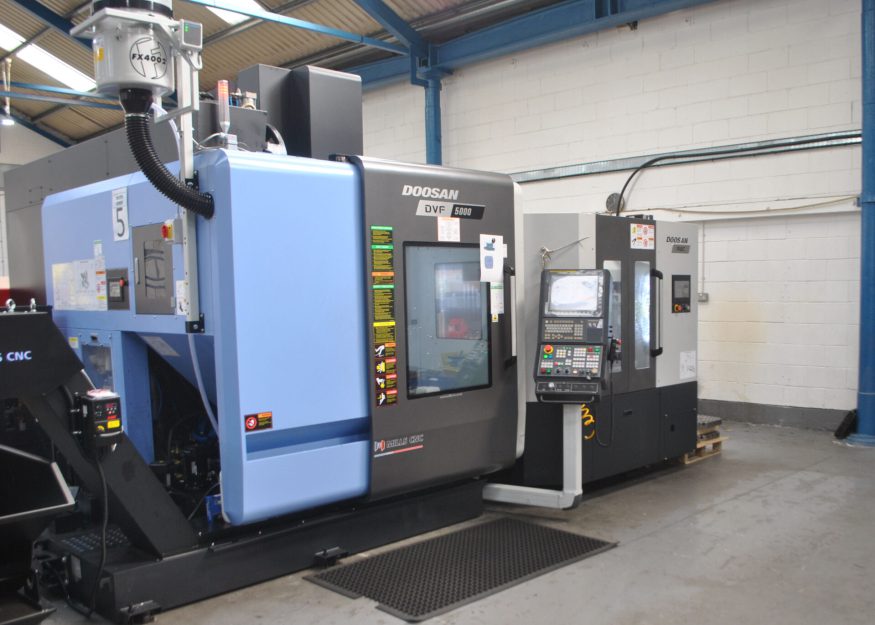
CNC machining centers are among the most important machines used in modern manufacturing. From aerospace and automotive components to medical devices and consumer electronics, these advanced machines help manufacturers produce highly accurate parts with speed, consistency, and efficiency. As industries continue to demand tighter tolerances and faster production, CNC machining centers have become an essential investment for businesses of all sizes.
Unlike conventional machine tools, CNC (Computer Numerical Control) machining centers operate using computerized programming. This automation minimizes human error, improves repeatability, and allows manufacturers to produce complex components with exceptional precision. Whether you’re a manufacturer, engineering student, machinist, or business owner looking to invest in production equipment, understanding cnc machining centers is essential.
This guide explains how CNC machining centers work, their types, benefits, applications, maintenance requirements, and tips for choosing the right machine for your manufacturing needs.
What Are CNC Machining Centers?
CNC machining centers are automated machine tools controlled by computer software that perform multiple machining operations such as milling, drilling, boring, tapping, and cutting within a single setup.
Unlike traditional manual machines, CNC machining centers follow digital instructions created through CAD (Computer-Aided Design) and CAM (Computer-Aided Manufacturing) software. These instructions precisely control tool movement, spindle speed, feed rate, and cutting paths, allowing manufacturers to create complex parts with remarkable accuracy.
Most machining centers include an automatic tool changer (ATC), enabling the machine to switch between multiple cutting tools without stopping production.
How CNC Machining Centers Work
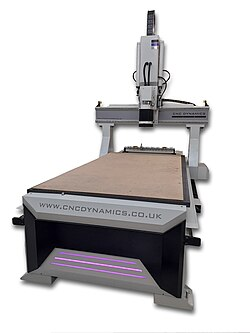
The machining process begins with designing a part using CAD software. Once the design is complete, CAM software converts the design into machine-readable G-code.
The basic workflow includes:
- Creating a CAD model
- Generating CNC toolpaths
- Loading the program into the machine
- Securing the workpiece
- Installing cutting tools
- Running automated machining operations
- Inspecting the finished component
Because the entire process is computer-controlled, manufacturers achieve consistent quality across large production runs.
Types of CNC Machining Centers
Vertical Machining Centers (VMC)
Vertical machining centers feature a vertically mounted spindle and are commonly used for general machining tasks. They are ideal for milling, drilling, and precision component manufacturing.
Horizontal Machining Centers (HMC)
Horizontal machining centers position the spindle horizontally, allowing chips to fall away naturally during machining. They are widely used for high-volume production and complex parts.
Five-Axis CNC Machining Centers
Five-axis machines move the cutting tool or workpiece along five different axes simultaneously, allowing highly complex geometries to be machined without multiple setups.
Multi-Axis Machining Centers
Advanced multi-axis machines improve productivity by reducing setup time and increasing machining flexibility for intricate components.
Key Components of CNC Machining Centers
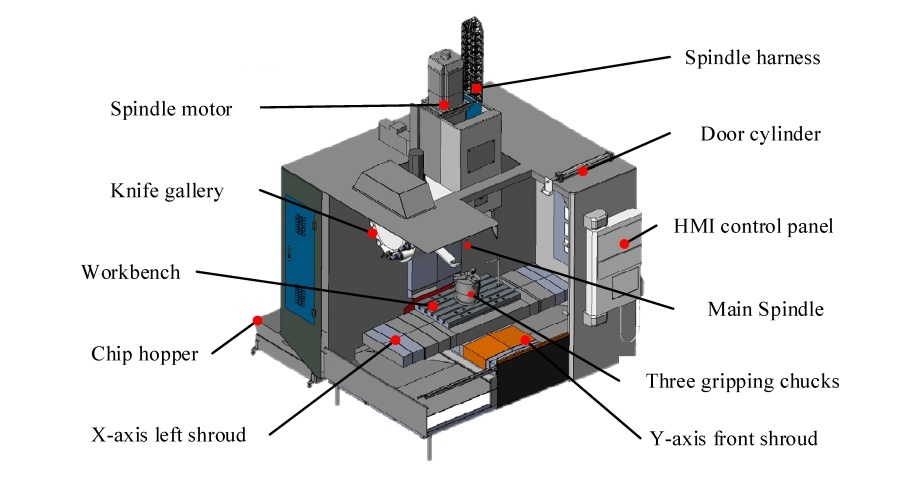
Every CNC machining center contains several important parts.
Machine Frame
Provides structural stability and vibration resistance.
Spindle
Rotates cutting tools at high speeds for machining operations.
Automatic Tool Changer
Changes cutting tools automatically during production.
Control System
The CNC controller interprets G-code and manages machine movement.
Work Table
Supports and securely holds the workpiece throughout machining.
Coolant System
Helps control heat while extending cutting tool life.
Advantages of CNC Machining Centers
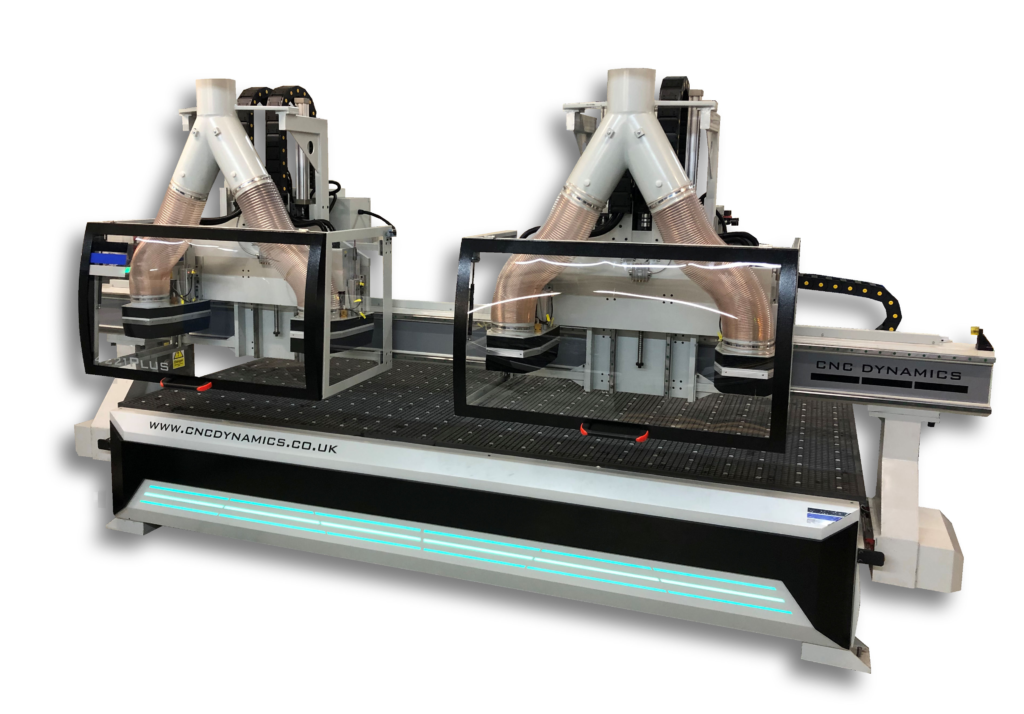
Manufacturers choose cnc machining centers for numerous reasons.
High Precision
Modern CNC machines achieve extremely tight tolerances, making them ideal for precision manufacturing.
Increased Productivity
Automation enables continuous production with minimal operator intervention.
Excellent Repeatability
Every produced part can match the original specifications consistently.
Reduced Labor Costs
One operator can often supervise multiple machines simultaneously.
Faster Production
Automatic tool changes and optimized toolpaths reduce machining time.
Improved Safety
Operators have less direct contact with cutting tools compared to manual machining.
Industries That Use CNC Machining Centers
CNC machining centers serve many industries, including:
- Aerospace
- Automotive
- Medical device manufacturing
- Electronics
- Defense
- Oil and gas
- Industrial machinery
- Robotics
- Energy
- Consumer products
These industries rely on CNC technology because precision and consistency are critical for product quality.
Common Materials Machined
CNC machining centers can process a wide variety of materials.
Metals
- Aluminum
- Steel
- Stainless steel
- Titanium
- Brass
- Copper
Plastics
- ABS
- Nylon
- Polycarbonate
- Acrylic
- Delrin
- PEEK
Other Materials
- Graphite
- Composite materials
- Engineering polymers
- Certain wood products
Material selection depends on the application’s strength, weight, durability, and cost requirements.
Factors to Consider Before Buying CNC Machining Centers
Choosing the right machine requires careful evaluation.
Production Volume
High-volume manufacturing may benefit from horizontal or multi-axis machining centers.
Part Complexity
Five-axis machines reduce setup time for intricate designs.
Machine Size
Select a machine that accommodates your largest workpieces.
Spindle Speed
Higher spindle speeds improve machining performance for certain materials.
Tool Capacity
Automatic tool changers with more tool positions increase production efficiency.
Software Compatibility
Ensure the machine works with your preferred CAD/CAM software.
Maintenance Support
Reliable technical support and spare parts availability are important for minimizing downtime.
CNC Machining Center Maintenance Tips
Proper maintenance extends machine life and ensures consistent accuracy.
Recommended practices include:
- Clean the machine daily
- Lubricate moving components regularly
- Inspect spindle performance
- Replace worn cutting tools
- Check coolant levels
- Verify machine calibration
- Tighten fasteners
- Keep software updated
- Schedule preventive maintenance
Routine maintenance helps prevent unexpected production interruptions.
Future of CNC Machining Centers
Manufacturing technology continues to evolve rapidly.
Future developments include:
- Artificial intelligence for process optimization
- Smart factory integration
- Industrial Internet of Things (IIoT)
- Predictive maintenance
- Real-time production monitoring
- Advanced automation
- Robotic material handling
- Digital twin technology
These innovations will further improve efficiency, productivity, and manufacturing precision.
Conclusion
CNC machining centers have transformed modern manufacturing by combining automation, precision, and productivity into a single machine. They allow manufacturers to produce complex parts with outstanding accuracy while reducing production time and operational costs. From aerospace and automotive industries to medical devices and consumer electronics, CNC machining centers remain one of the most valuable investments for precision manufacturing.
Before purchasing a machine, evaluate your production requirements, material compatibility, machine capabilities, software support, and long-term maintenance needs. Selecting the right CNC machining center can significantly improve manufacturing efficiency and product quality for years to come.
Frequently Asked Questions
What are CNC machining centers?
CNC machining centers are computer-controlled machines that perform milling, drilling, boring, tapping, and other machining operations with high precision.
What industries use CNC machining centers?
They are widely used in aerospace, automotive, medical, electronics, defense, energy, and industrial manufacturing.
What materials can CNC machining centers machine?
They can machine aluminum, steel, titanium, brass, plastics, composites, and many engineering materials.
What is the difference between a vertical and horizontal machining center?
A vertical machining center has a vertically oriented spindle, while a horizontal machining center uses a horizontal spindle that improves chip evacuation and supports higher production efficiency.
Why are CNC machining centers important?
They improve manufacturing accuracy, increase productivity, reduce labor costs, provide consistent quality, and enable efficient production of complex components.